

Walking Without Google Maps
Why the most important skill for the AI age has nothing to do with AI

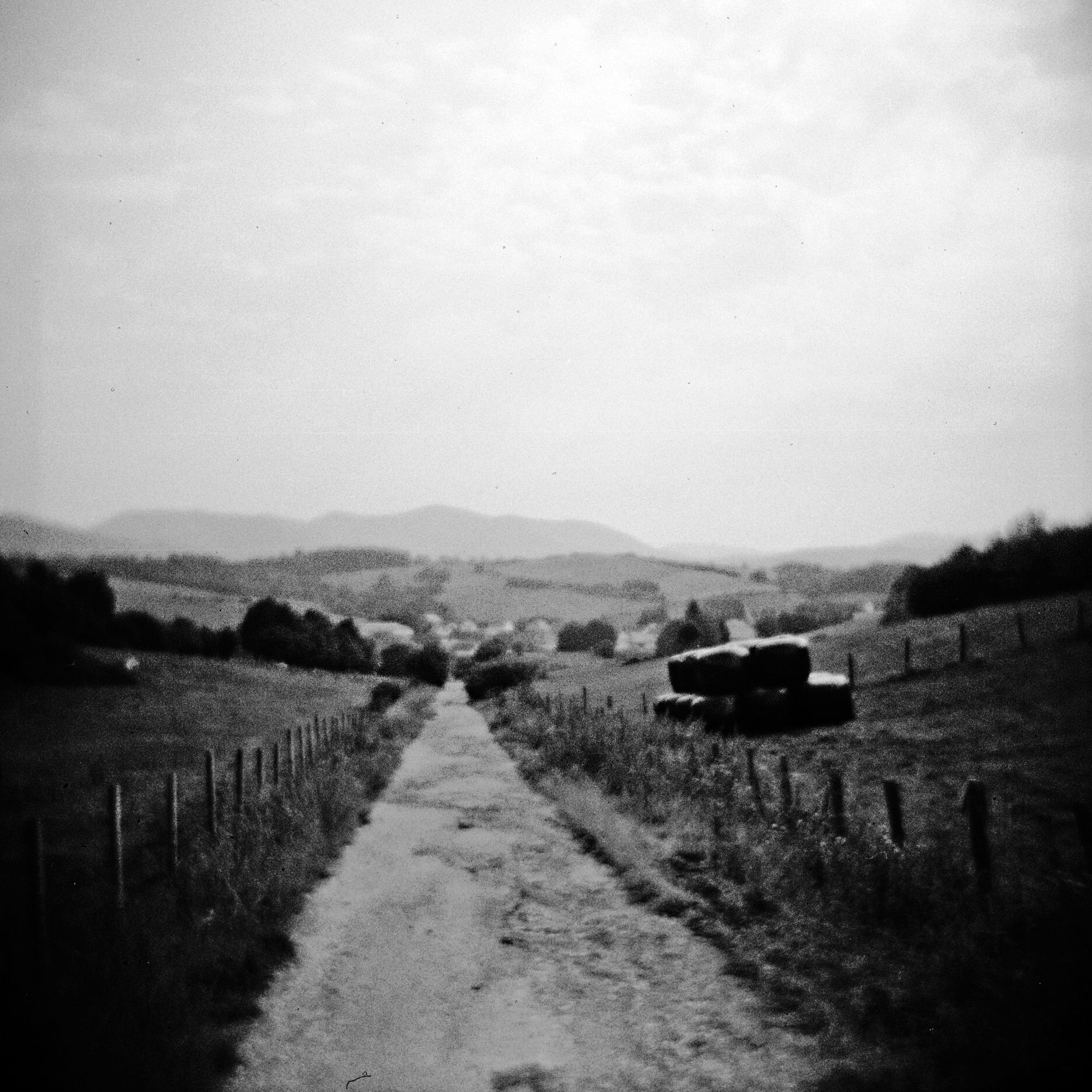
I walked the Camino de Santiago — a pilgrimage across southern France and northern Spain — twice. The first time, with my best friend — eight hundred kilometers to a cathedral that, when you arrive, feels almost beside the point. Santiago de Compostela is the destination, but more so, it is the permission to walk. Nobody who’s done it confuses arriving with the true purpose. When we reached Santiago, we had a massive, wine-soaked dinner with pilgrims we’d met along the way — and then decided to keep going. Past Santiago to Finisterre, literally, the end of the world, where there were no pilgrim refuges. We spent wet nights in abandoned buildings, sleeping on hay and eating hard cheese. We wanted to walk right off the map, and we did.
The destination gave the walk structure. The walking gave us everything else.
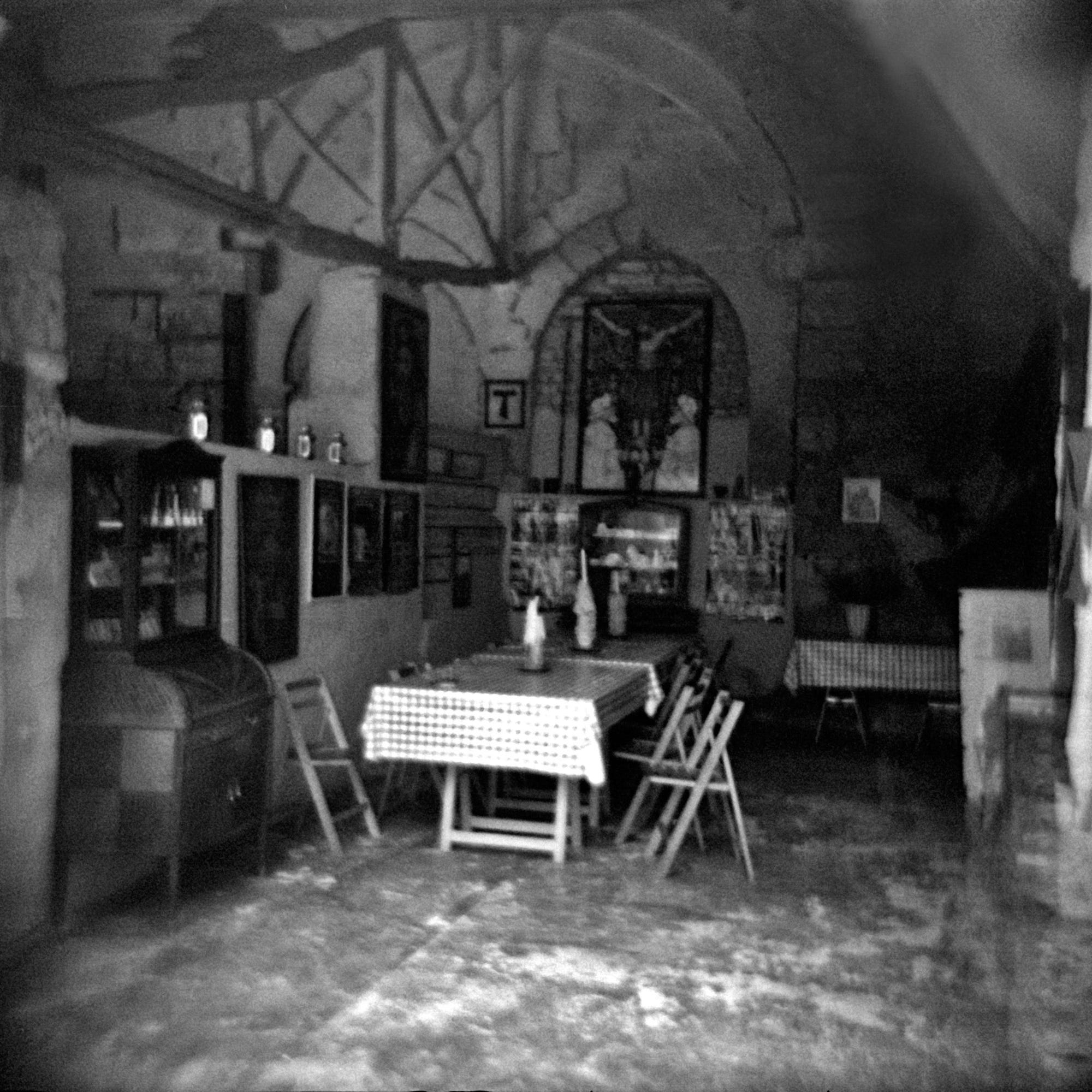
I walked the Camino again years later with my now-wife. Off the map, we discovered a secret camino within the camino, one accessible only through serendipity.
I’ve been thinking about this for twenty-five years now — what it means to walk through the world with clear intent and no predetermined outcome. It’s the thread that runs through everything I’ve built, and it’s become the thing I most urgently want other people to understand, not because it’s a nice philosophy, but because the world suddenly handed everyone extraordinarily powerful tools. Tools for which almost nobody has the practice to use well.
Let me back up.
I studied English and biology at Oberlin — a combination that gave me two frameworks for understanding humanity at once: how we make meaning, and how we’re built. For my final paper in my Transcendentalism class, I wrote my professor a letter informing him, with the diplomatic grace of a nineteen-year-old, that I would not be writing a final paper — that I was still considering the primary sources and would complete my study of Transcendentalism whenever I damn well pleased.
After Oberlin I read Melville at sunrise in Durango before heading to the jobsite, taught in New York, walked the Camino, and spent years doing what I’d been trained to do, though nobody would have recognized it as a career path. Eventually, I missed the structure — not a destination, but the permission to walk with discipline. The Camino gives you that by having Santiago at the end. Undergrad gives you that by having graduation. I wanted that again, but I didn’t want a PhD, because a PhD had a destination that was too fixed: academia. It was a pursuit about the world, not of it.
I narrowed it to two options that sound absurd together but weren’t: divinity school or architecture school. Both were disciplines of attention — systematic ways of learning to see and be in the world that combined theory with practice. Both were, at their core, sets of tools for naming and following intention.
Not having a vocation for ministry, I chose architecture school. But the Camino had already taught me what both options shared: you learn to see by moving through the world attentively, not by being told what to look at.
Design school changed how I thought, and it did so by changing what it asked me to do.
In a design studio, you don’t start with the answer. You start with a situation — a site, a set of constraints, a human need — and you move toward something through iteration. You research. You sketch. You build a model. You pin it to the wall and twenty people tell you what’s wrong with it. You throw it away and start again.
I learned quickly that I could never please the critics — the critique was always informed by their own views and biases, and trying to anticipate them was a dead end. In one studio I said fuck it and spent three weeks wading into the ocean at high tide trying to map sand patterns in an intertidal zone. I got pneumonia. At the final review I pinned up all of my failed designs alongside the X-rays of my lungs — partly as a joke, partly as honest documentation of how many paths I’d wandered before arriving at the thing on the wall. That was the studio where I stopped caring whether people liked what I’d made and started caring whether my intent was understood and executed with mastery. Those are very different things.
But here’s the deeper thing, the thing that separates design education from almost every other kind of training: the problem itself is not given to you. Not really. You’re handed a framing — a site, a brief, a set of parameters. But your actual job is to define the problem you will engage with. That’s why twenty students given the same brief produce twenty fundamentally different projects. Not because they have different skills, but because each one has to find their own authentic relationship to the question.
The end is never visible at the beginning. That’s not a flaw in the method — it is the method. Architecture school systematizes process over knowledge. It teaches you to tune constantly — to the physical world, the economic reality, the human beings you’re designing for, the collaborators you’re designing with. It is a fundamentally collaborative discipline, which means your ability to hold your vision loosely enough to incorporate other people’s intelligence is not a soft skill. It’s a survival skill.
The profession is wildly mismatched with the ambitions of the education — most architects spend their careers navigating liability and budgets, not exploring the nature of dwelling. But the training installs something that persists regardless of whether you practice architecture: a comfort with not knowing where you’re going, combined with a disciplined attentiveness to what’s emerging as you move.
Designers learn to walk before they know the destination. And that capacity turns out to matter far beyond design.
At NuVu Studio, where I spent eight years building the academic program, the founding idea was to teach young people the way architects learn. Open-ended, messy, real-world problems. Research, brainstorm, prototype, critique, throw it away, start over. Document everything. Reflect on what changed and why. The process was the product.
My job was to make this consistent and scalable without flattening it — the pedagogy, the assessment, the facilitator training, the technology. And what I discovered was that the people who could do this work naturally were designers. Architects, industrial designers, people trained in studio culture. They walked into the room already comfortable with ambiguity. Critique wasn’t threatening. Iteration wasn’t failure. The open-ended problem wasn’t a gap in the lesson plan — it was the lesson plan.
Part of my work at NuVu was bringing this methodology to educators from outside — experienced professionals from traditional school systems. And that’s where I hit a wall.
I had brought what I knew worked — open-ended problems, prototyping, critique, reflection. And the educators I was working with were smart, dedicated, experienced professionals. Many of them were brilliant. But when I said the outcome should surprise us — that if a student’s final project looked like their initial idea, something had gone wrong — they looked at me like I was being irresponsible.
They wanted the learning objectives before the lesson started. They wanted the rubric before the project was assigned. They wanted to know what “good” looked like so they could guide students toward it. They weren’t being difficult. They were doing exactly what they’d been trained to do. And their training — the credentialing, the methods courses, the accountability systems — was built on a foundational premise: that the teacher knows the destination and the student’s job is to arrive there.
I don’t blame them. They were operating inside a system designed to produce certainty. The entire apparatus of teacher education is built on working backward from outcomes: define the objective, design the assessment, plan the instruction. “Good teaching” means efficient transmission. This is not a failure of individual teachers. It is a design problem — and I mean that literally. Pedagogy is design. Curriculum is design. Someone made choices about how these systems work. And we have designed systems that train professionals to need the answer before they start, then wonder why they struggle when the conditions change.
The pattern kept repeating, and eventually I had to name it: the people who struggled most with open-ended, iterative process weren’t less capable. They had been systematically trained out of the capacity it required.
At NuVu, we’d mostly worked with progressive private schools and unusually adventurous public ones — and even there, the wall was real. When I left and moved into the nonprofit sector, working with Title I and general public schools, it intensified dramatically. The accountability systems were tighter, the autonomy was thinner, and the training ran deeper. These were professionals operating inside systems that had spent decades making sure nobody had to tolerate ambiguity.
I saw the same thing in the maker movement. Makerspaces are great at empowerment — you hand someone a 3D printer and they feel powerful. But overwhelmingly, and I say this with love because I spent years in these rooms, they download a dragon from Thingiverse and print it. These days it’s even worse — the dragons are amazing, articulated and flexible, genuinely impressive objects. And completely impossible to iterate on, because they were designed by someone else and downloaded as a finished object. The tool is extraordinary. The process around the tool is absent. And so the dragon sits on a shelf, and the 3D printer becomes expensive proof that access to tools is not the same thing as learning to think.
And then AI arrived — and the education system’s response told you everything about the depth of the problem.
When a system designed around predetermined outcomes encounters ChatGPT, the first response is fear. Not individual fear — systemic fear. Fear of cheating. Fear of losing control. The system has trained its professionals to establish frameworks and hold them — to not assign value to innovation or the breaking of systems. So the initial institutional response was predictable: How do we stop this?
We’re maybe moving past that. But what’s replaced it isn’t much better. Now it’s: Use AI to make a PowerPoint. Use AI to do research. Use AI to differentiate instruction. These applications leave the underlying structure untouched — they don’t require rethinking what education is, or what learning looks like, or what we’re actually asking students to do. They take the existing system and make it faster. They are, to borrow the metaphor, Google Maps applied to the same old routes.
But here’s the thing I need to say clearly, because this essay will be misread if I don’t: this is not an essay about education.
Education is where I learned to see the problem. It’s the system I know best, the one I spent fifteen years trying to redesign from the inside. But the pattern doesn’t stop at the classroom door.
The same professional training that teaches educators to need the rubric before the project teaches managers to need the ROI projection before the experiment. It teaches consultants to deliver frameworks instead of discoveries. It teaches organizations to mistake planning for thinking and compliance for competence. And every one of these institutions is now doing its own version of the fear-then-shallow-adoption cycle: first how do we control this, then how do we use it to do the same things faster. We have built a culture that rewards knowing the destination — and treats not-knowing as incompetence rather than the beginning of inquiry.
This worked, more or less, when the tools available to us were dumb. A spreadsheet doesn’t pretend to think. But AI does — fluently, confidently, and at a scale that amplifies the consequences of weak judgment.
A designer — or anyone trained in iterative, critique-driven process — encounters AI and asks a different kind of question: What happens if I try this? What did it actually produce? Is this good? How would I know? What should I try next?
Everyone else asks: Give me the framework. Show me the rubric. Tell me the right way to use this.
The first orientation seeks to navigate ambiguity. The second seeks to collapse it. And the difference between those two orientations isn’t about AI literacy or technical skill or intelligence. It’s about whether you were ever taught to operate without knowing the answer in advance.
I know this because I felt it myself. Back in the early days of DALL-E I explored AI for creative work for the first time. Each day I created an image representing my internal state — emotional or intellectual — to capture what was on my mind. When I began, I got bizarre and fascinating results (the most ridiculous being a Monet-esque turkey doing a pirouette in a tutu). But not my results. They were interesting the way a stranger’s dream is interesting: vivid, suggestive, and ultimately someone else’s. It was only when I began to draw on my practice as a photographer — years of working with custom emulsions, understanding how light behaves on particular surfaces — that I was able to push the AI toward something genuinely expressive. Not by asking it nicely, but by being explicit in ways that required me to understand my own intentions and process first.
AI will always produce something. It will seldom produce what you intend unless you are ruthlessly clear about what that intention is. The tool wasn’t the problem. The absence of practice was. Judgment isn’t something you can outsource. It’s something you build by repeatedly encountering uncertainty and deciding what deserves your trust. And AI has become enormously more powerful since then — which means the gap between output and intention has only gotten wider for anyone who hasn’t built the discipline to close it.
AI didn’t create the gap. It just made it impossible to ignore. We replaced exploration with maps — and then wondered why nobody knew how to explore anymore. And the gap is everywhere, not just in schools. In boardrooms where executives approve AI strategies based on vendor demos they cannot independently evaluate. In development teams where engineers ship AI-generated code they don’t understand. The dragon on the shelf isn’t just a classroom problem. We have given everyone a 3D printer and almost nobody a design process.
Twenty years ago, editing an issue of MIT’s architecture journal, I wrote about Thoreau’s essay “Walking” — about his insistence that the walker must abandon predetermined destinations, must “return to my senses” by releasing the compulsion to know where the walk will end. The literary critic Peter Fritzell described Thoreau’s demand as requiring “a tolerance for ambiguity that is very difficult to sustain. It is, in essence, a dedication to paradox, and even an occasional delight in uncertainty, that can be extremely unsettling.”
I’ve returned to that sentence more times than I can count. Not because it describes Thoreau particularly well — though it does — but because it describes the single hardest thing I’ve ever tried to teach anyone to do.
Thoreau’s walker is a saunterer — from sans terre, without a land, and therefore at home everywhere. The saunterer doesn’t wander aimlessly. The saunterer moves with intent but without a fixed destination, paying attention to what emerges, letting the walk itself reveal what matters. This is what design education teaches, whether it knows it or not. Not the software. Not the aesthetic. The practice of moving forward with clear intent and no predetermined outcome — and building the judgment to know, step by step, whether you’re getting closer to something real.
And it’s exactly what working well with AI demands. Not a checklist. Not best practices. A lived practice — the uncomfortable discipline of testing what it produces and deciding, again and again, whether it deserves your trust.
The capacity is there. It has always been there. When I worked with educators who’d been trained in predetermined-outcome systems, the wall I hit wasn’t permanent — given a process they could trust and permission to not know, most of them got it. The capacity had just never been asked for. The same is true now, everywhere, at a much larger scale.
Self-reflection, intention, iteration, the willingness to sit with ambiguity — these used to be the province of artists, philosophers, the occasional eccentric professor. Enriching but not essential. Now they’re the baseline requirements for maintaining agency in a world where machines will happily do your thinking for you, and do it fluently enough that you won’t notice you’ve stopped.
Thoreau wrote that “the highest that we can attain is not Knowledge, but Sympathy with Intelligence.” I used to read that as a poetic abstraction. Now I read it as a design specification — maybe the most urgent one we have. Not for any one institution, but for anyone who wants to remain the author of their own thinking in an age of fluent, confident machines with no stake in whether they’re right.
He also wrote that “the direction doesn’t yet exist distinctly in our idea.” That isn’t the problem. It’s the condition required for discovery.
When my wife and I walked the Camino, we found a secret camino within the camino. The official route has state-run refugios — fine places with beds and showers for ten dollars. What we discovered was a loose network of volunteers who opened their homes, their farms, their churches. These places were free. At the door there was a bowl of money. You put some in or took some out according to your means. No one watched. It was unceremonious and without ado. Everyone cooked together, cleaned together, ate together with prayer. There was a quiet service in the evening before bed. There was singing. All were welcome. The caretakers weren’t part of any order — they had simply heard of one another, corresponded, developed a shared practice, and told you where the next place in the network was.
The Basque men we met were four friends who had found each other on the Camino years earlier and were walking it again together. They played accordion and sang. We set up tolls on the path where we’d stop other pilgrims and ask them to sing with us or tell a story. It was delightful madness.
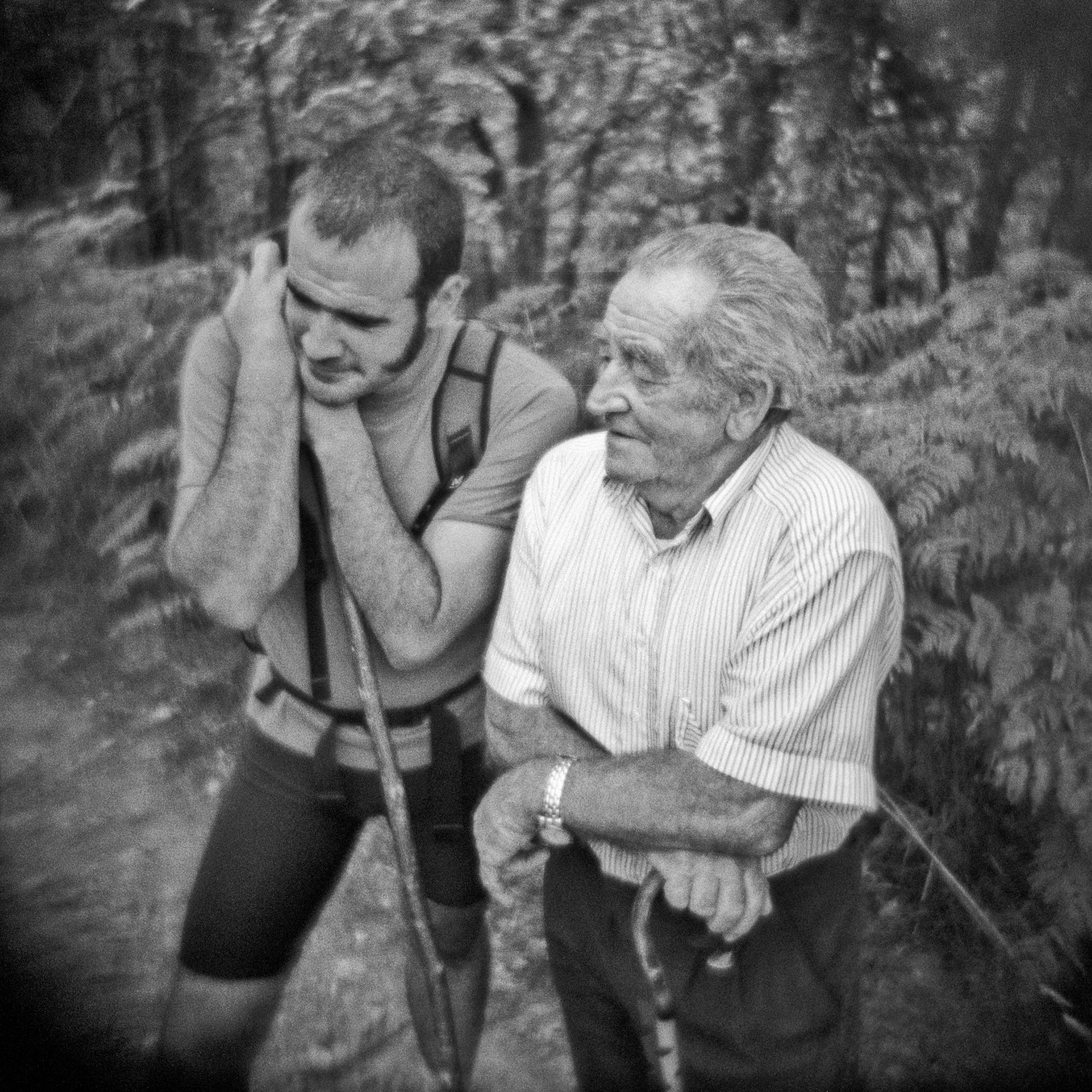
None of this was on the map. None of it could have been planned for. It existed because people had built it — attentively, collaboratively, without knowing in advance what it would become — and stepping off the official route was where the true walk began.

Andrew Marcus is a systems architect, builder, and the creator of the Ho System — a structured methodology for human-AI collaboration. He writes about systems design, critical thinking, and building things you actually understand.
This is his third post. The first — on the methodology behind building a production computer vision system without being a developer — is [here]. The second — on being accused of machinery for using too many em-dashes — is [here].